© TABOO 2015-2024

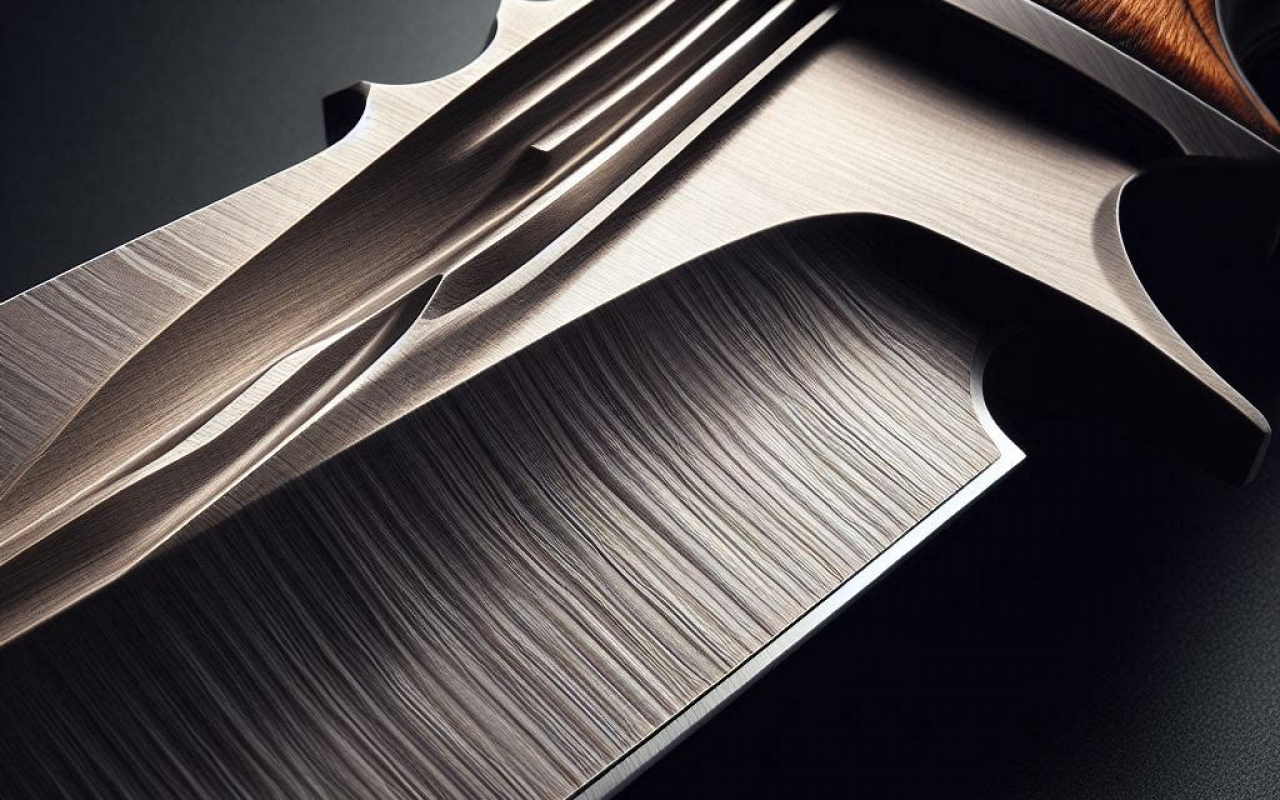
Blade profile plays a crucial role in determining a knife's cutting performance. While the quality of the blade material also has an impact, the blade profile is primarily responsible for the edge's longevity.
1. **Hollow Grind (Concave):** This is the most common profile, often achieved using a cylindrical grinder due to its simplicity. Knives with this profile are not well-suited for cutting thick materials as their thickness increases rapidly away from the cutting edge, and their lateral strength is not very high. However, they excel at shallow cuts.
2. **Flat Grind:** This profile has gained popularity recently. It offers higher lateral strength than the previous one and is suitable for cutting thick, dense materials. It's perhaps the optimal choice for an everyday urban knife.
3. **Convex Grind (Convex "Lens" Shape):** This is a favorite profile among blacksmiths, though there are also knives with convex grinds made by milling sheet metal. Such knives often lack secondary bevels, and the grinds simply converge to a "zero" edge. This profile results in increased strength but may sacrifice some cutting performance and requires a somewhat intricate sharpening process. It has proven itself well on versatile outdoor knives.
4. **Scandi Grind:** A variation of flat grind where there are no secondary bevels; the cutting edge is formed directly by the grinds. This profile is characteristic of puukko knives (Finnish knives) and is considered highly effective for wood cutting. The simplicity of sharpening these knives by hand on a whetstone (pressing the wide grind against the stone) has made them popular for versatile use.
5. **Chisel Grind (Single-Side Bevel):** This profile allows for a very fine edge and is primarily used in carving knives and "utility" knives (e.g., keychains or multi-tools).
6. **Asymmetrical Grind:** Found on knives designed for specific tasks. Traditional Japanese kitchen knives, for instance, often have a one-sided grind with a slightly curved second side (urasuki).
Please note that the choice of blade profile should be based on the intended use of the knife, and each profile has its advantages and disadvantages in terms of cutting performance, strength, and ease of maintenance.